Second study, same conclusion: capture is not optional
A second independent SGS analysis of waste collected during one of our hull cleanings in Singapore confirms what our first study showed. The figures moved. The conclusion did not.
In April 2026 we published our first independent laboratory analysis of hull cleaning waste. Copper came in at 428 times the NOAA toxicity threshold for marine sediments, and the findings resonated widely across the industry.
A single sample is a data point, not a pattern. So we commissioned a second analysis from SGS, with the same laboratory and the same methods, on waste collected during a separate cleaning operation in Singapore. The results were reported on 19 October 2026.
Why we tested again
When a company publishes findings that support its own business model, the market is right to ask questions. We would rather answer them with data than with claims.
Hull cleaning waste varies with the vessel, its trading pattern, the type and age of its coating, and how much fouling has built up. A second sample shows whether the first was an outlier or a fair picture of what the industry is dealing with. It also holds us to our own findings. Had the second result contradicted the first, we would have published that too.
What we found
Copper rose to 750 times the NOAA toxicity threshold, and lead has now moved above its threshold as well.
| Metal | NOAA threshold (ERM) | First study, Feb 2026 | Second study, Oct 2026 |
|---|---|---|---|
| Copper | 270 mg/kg | 115,525 mg/kg (428×) | 202,607 mg/kg (750×) |
| Zinc | 410 mg/kg | 34,398 mg/kg (84×) | 15,308 mg/kg (37×) |
| Lead | 218 mg/kg | 103 mg/kg (below threshold) | 299 mg/kg (1.4×) |
Copper is the main active ingredient in most antifouling coatings. Its concentration rose by 75 percent between the two samples and now stands at 750 times the level associated with frequent harmful effects on marine life. Lead nearly tripled. Zinc was lower, but still 37 times the threshold.
What changed, and why it matters
Two samples will never be identical, and they should not be. Our first article explained that waste loads scale with coating condition: the more degraded the antifouling, the more coating material, metals and polymers come off with the fouling. The second sample illustrates this. Copper and lead went up, while zinc went down.
Microplastic counts in the 25 to 500 micrometre range were markedly lower, possibly reflecting different coating components on this vessel. The composition still points to the hull itself. Acrylates, polyurethanes and varnish were again the largest group, and every particle larger than 0.5 mm was silicone rubber, a material used in foul release hull coatings. The largest fragments were all red on one face and black on the other, the signature of layered paint rather than ocean debris.
The laboratory also tested for organotins such as TBT and for common booster biocides. All were below the detection limit, consistent with the global ban on TBT. We report this because a credible study shows what it did not find as well as what it did.
Fewer species, not less risk
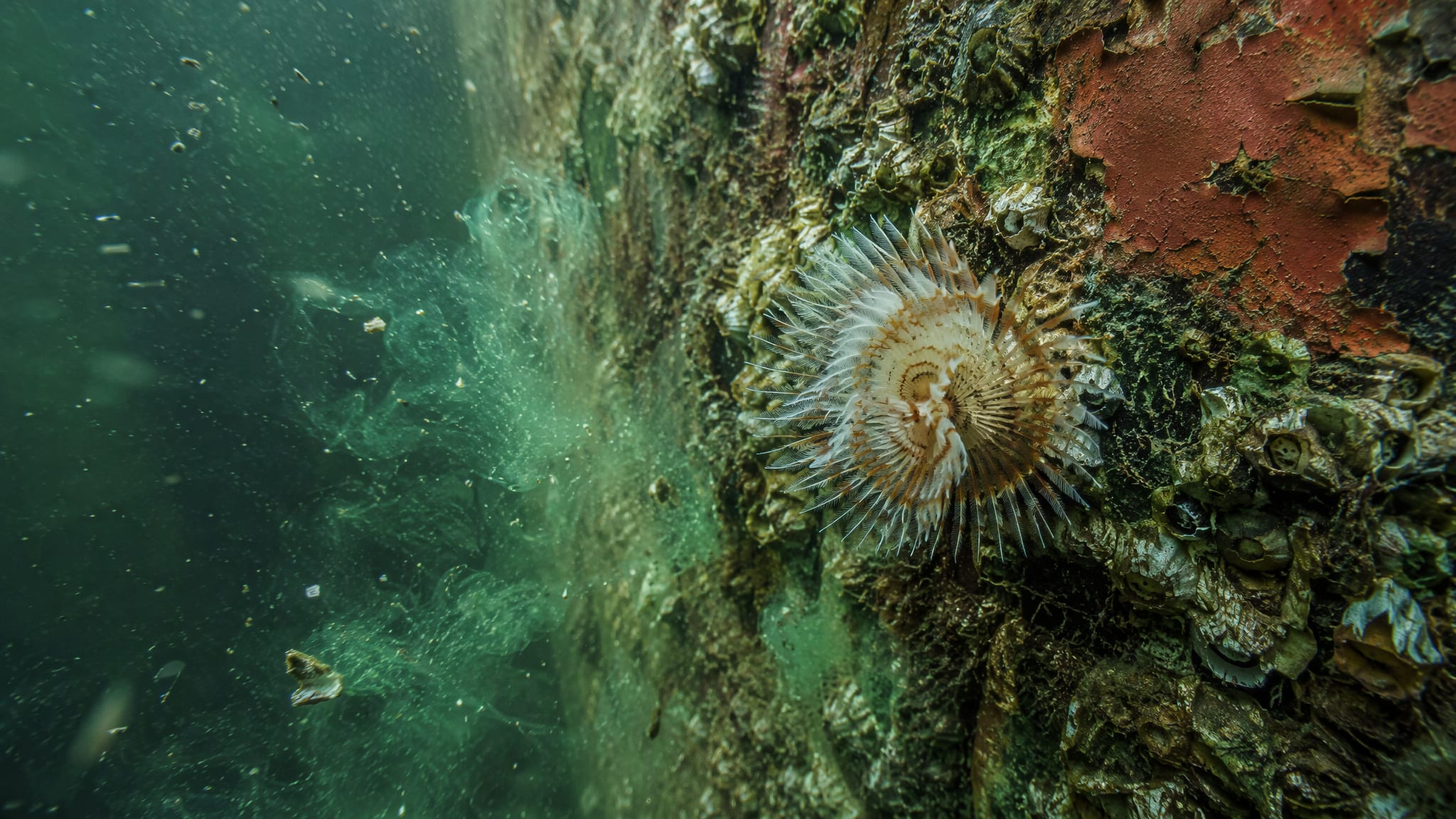
DNA sequencing identified eight species in the sample, all typical hull fouling organisms: four barnacles, two marine worms, a sea squirt and a nematode. One stands out. The European fan worm, Sabella spallanzanii, is native to the Mediterranean and the Atlantic coast of Europe and is recognised as an invasive marine pest in Australia and New Zealand. The reference database used by the laboratory records no local observations of it.
The number of species detected is lower than in our first sample, but that is not a measure of lower risk. One invasive species released into new waters can be enough to establish a population. This is exactly the material that capture keeps out of the water.
The conclusion has not changed
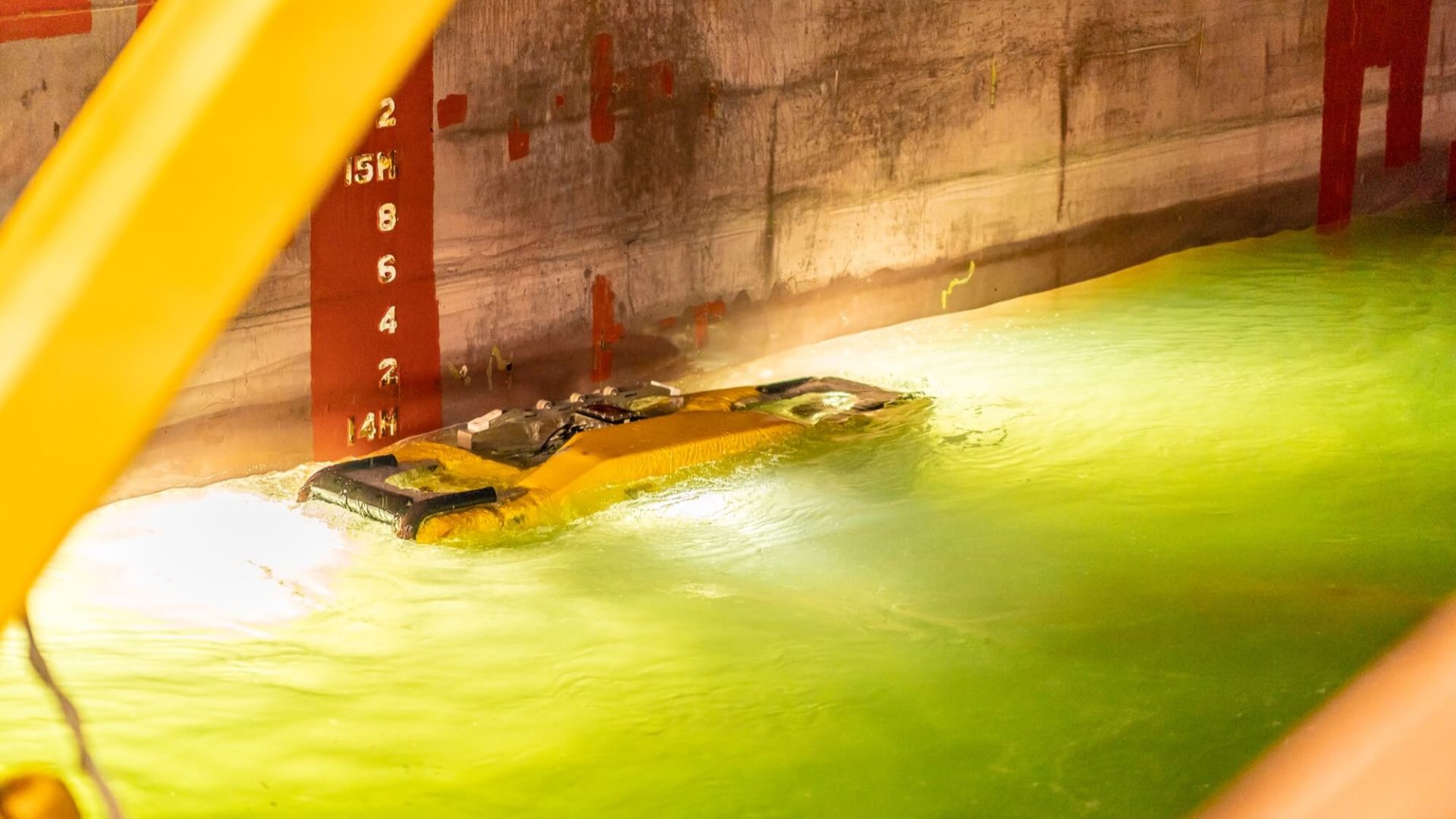
Two independent studies, two separate cleaning operations, one consistent picture. The waste that comes off a hull carries copper, zinc and lead far above marine toxicity thresholds, coating-derived microplastics and living organisms that do not belong in local waters.
“Cleaning without capture is not removing waste. It is relocating it.”
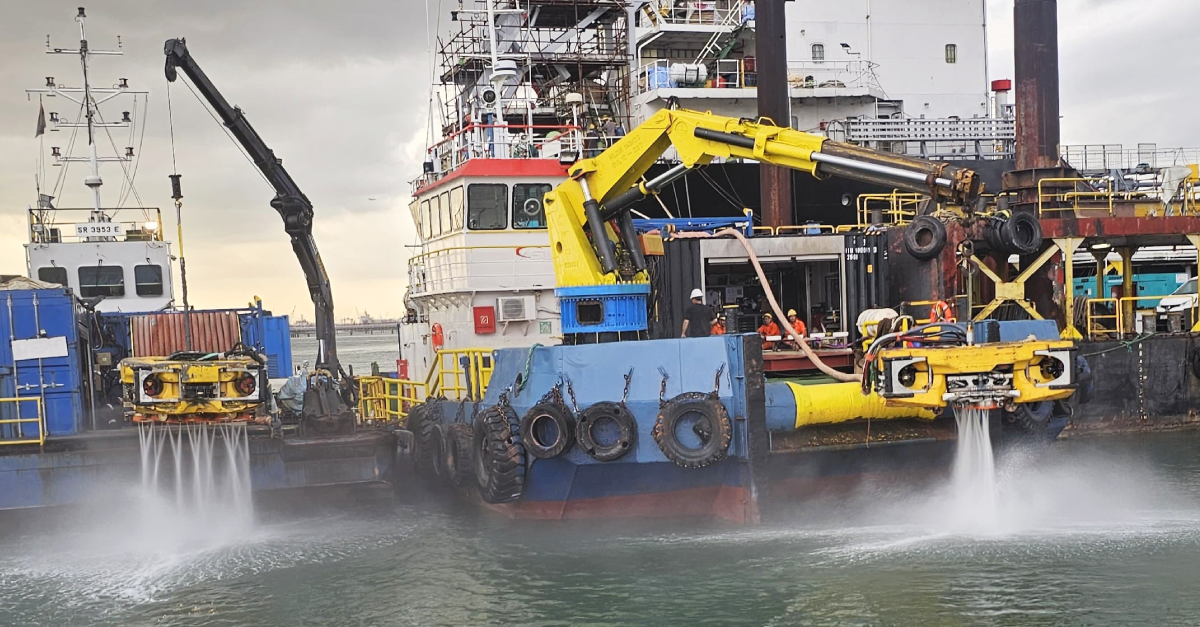
Regulation is moving in the same direction, with IMO guidance and stricter biosecurity regimes in Australia, New Zealand and Brazil. For shipowners and operators, how a hull is cleaned is becoming a matter of compliance, port access and reputation. In-water hull cleaning needs to happen with full capture, and the waste needs to be disposed of responsibly onshore. That is the standard C-Leanship operates to on every cleaning.
What comes next
A third independent study is planned for 2027. We will keep testing, comparing and publishing what we find, including results that do not fit a simple story. Environmental claims in our industry should be backed by evidence, and we intend to keep providing it.
Methodology: Sludge sample collected during a hull cleaning operation in Singapore and submitted to SGS Testing & Control Services Singapore Pte Ltd (SGS Reference: EHS/10629728/26). Sample received 2 September 2026; results reported 19 October 2026. Heavy metal analysis via EPA 3050B/6010D. Microplastic analysis via FTIR microscopy and FTIR-ATR (ISO/IEC 17025 accredited method). Species identification via DNA sequencing (NGS). Organotin and biocide analysis subcontracted to a third party accredited laboratory. NOAA ERM values from Long et al., 1995 (Sediment Quality Guidelines). First study: SGS Reference EHS/10618790/26, reported 3 February 2026.