Underwater hull cleaning
In-water hull cleaning by ROV — safe, gentle and sustainable, performed during port calls and while bunkering to save you valuable time.
The remote system, explained.
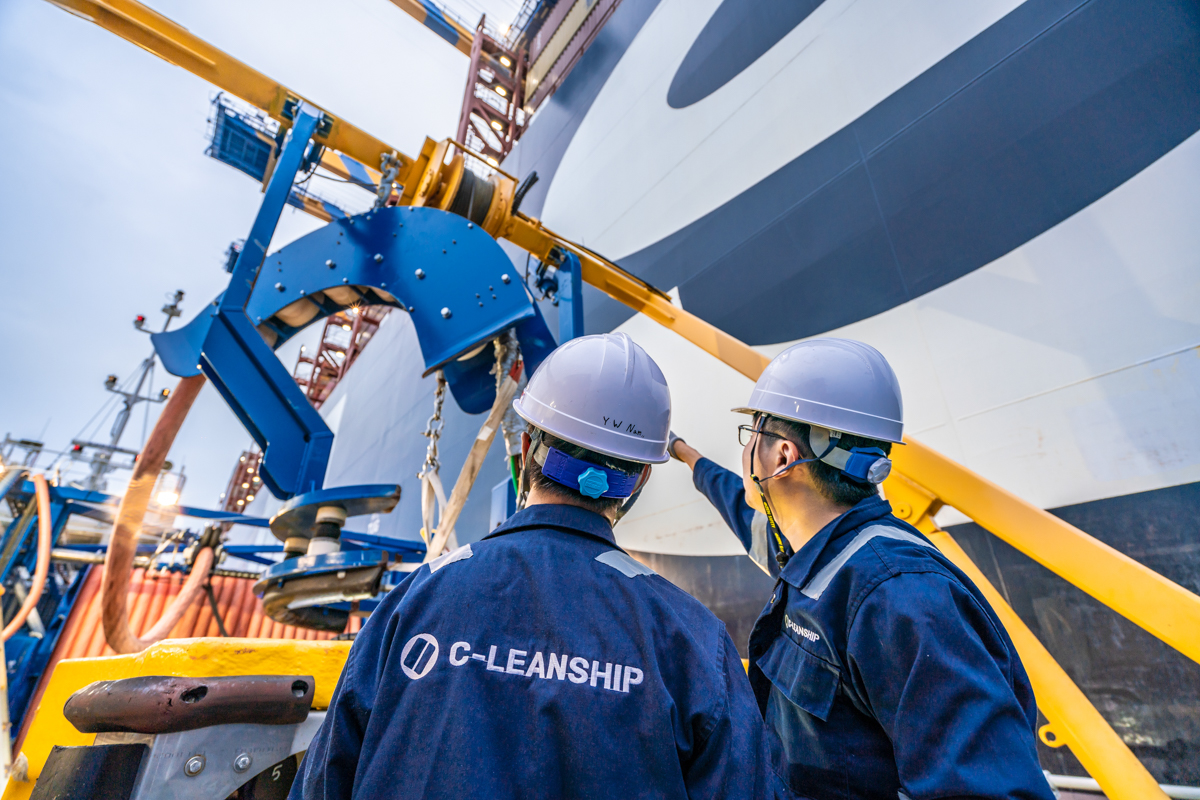
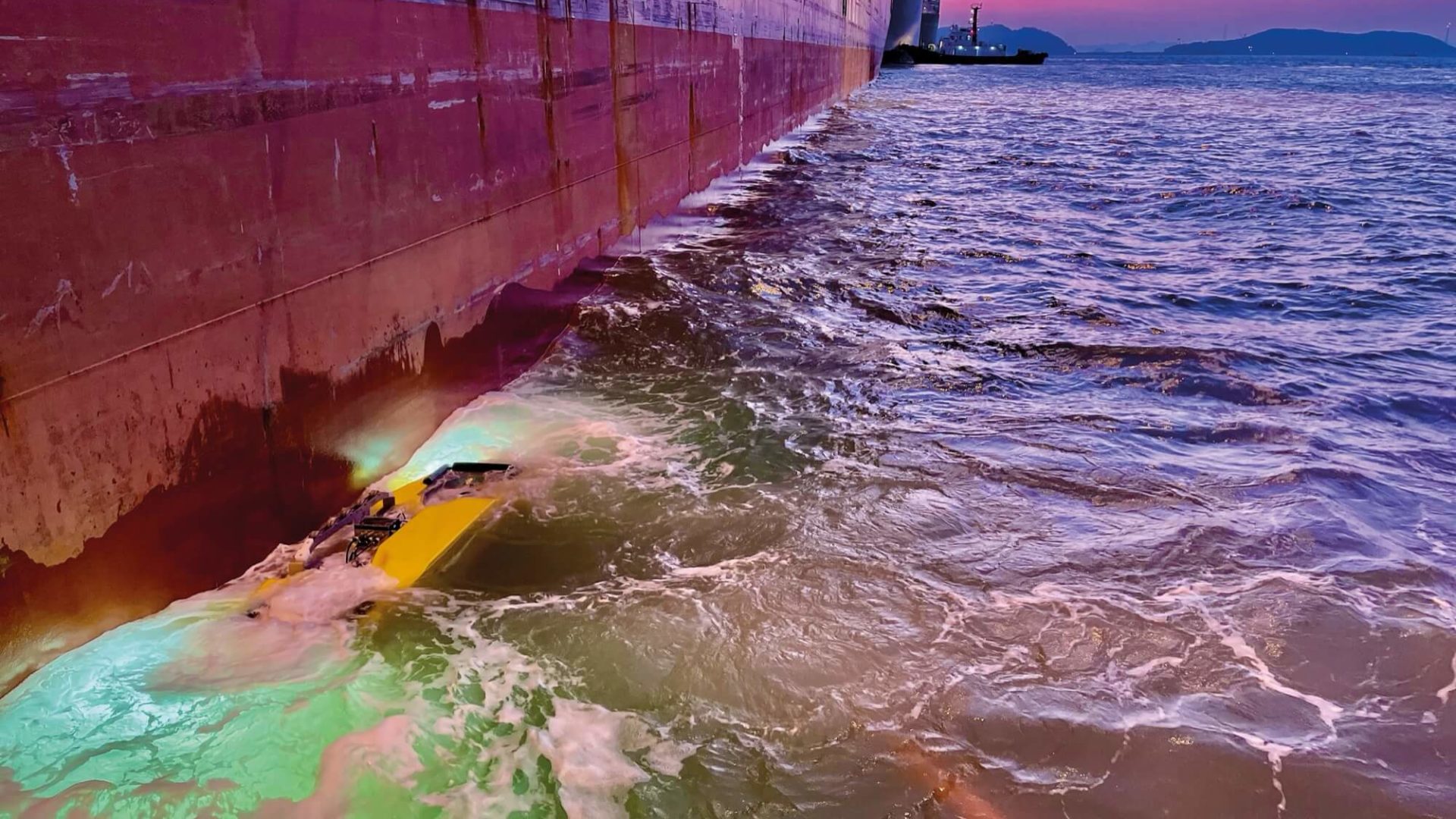
Our underwater hull cleaning — also known as in-water hull cleaning — is performed entirely by ROV, with no divers in the water. We clean your hull with the ShipShiner 02 — our second-generation ROV cleaning system. Thanks to the advanced navigation system we conduct the entire cleaning from a workboat and need no people in the water at any point. This fully remote solution is more efficient than traditional methods, and much safer. Our in-house developed waterjets are gentle, preserving the condition of your antifouling paint. Cleaned biofouling is filtered, collected, and disposed of according to well-established environmental standards — around the clock, weekday, weekend or public holiday.
What happens when you book with us.
You book a hull cleaning
We plan the job together with the captain and agent before the vessel comes in, so your crew has no additional work during the port call.
We clean your hull
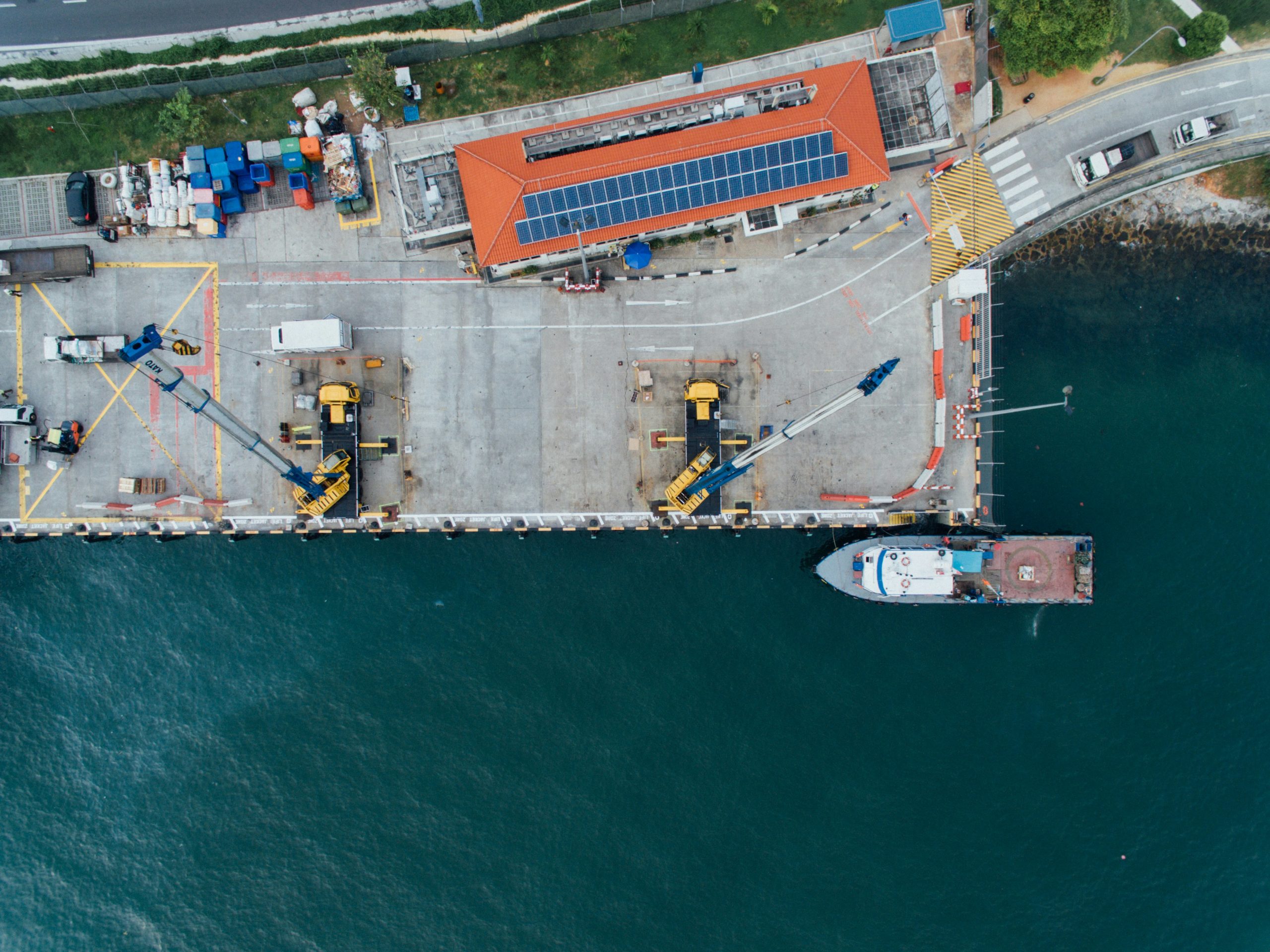
In port or at anchorage, we clean with our ROV from our workboat — normally completed within a standard port call.
We prepare the report
Before/after photos with draft marks where available. Our Digital Cleaning Log maps exactly where each photo was taken. Report within 48 hours.
We follow up
Our team discusses next steps based on the report and the condition of your vessel and antifouling coating.
Frequently asked questions
Will the cleaning damage my anti-fouling coating?
Our technology is based on water jets that are gentle to antifouling paint. We start at the lowest possible pressure and only increase if needed.
What happens to the biofouling?
Our collection system sends cleaned biofouling topside to the workboat, where we filter, collect and dispose of it via dedicated onshore facilities.
When should I clean?
We recommend cleaning if you have more than 30% biofouling coverage — this preserves your antifouling system and keeps emissions and fuel consumption low.